
- 0% APR and no-APR business credit cards compared
- What is a 0% APR business credit card?
- How to choose a 0% APR business credit card
- How to use balance transfers on a 0% APR card
- How to qualify for a 0% APR business credit card
- What kind of business is a 0% APR or no-APR card best for?
- Business vs. personal 0% APR cards
- Why businesses choose Ramp's no-APR corporate card
The best 0% APR business credit cards can help you finance an eligible purchase or transfer a balance without paying interest during a promotional period. Offers differ in length, balance transfer coverage, ongoing APR, and rewards, so choose one that fits your payoff plan.
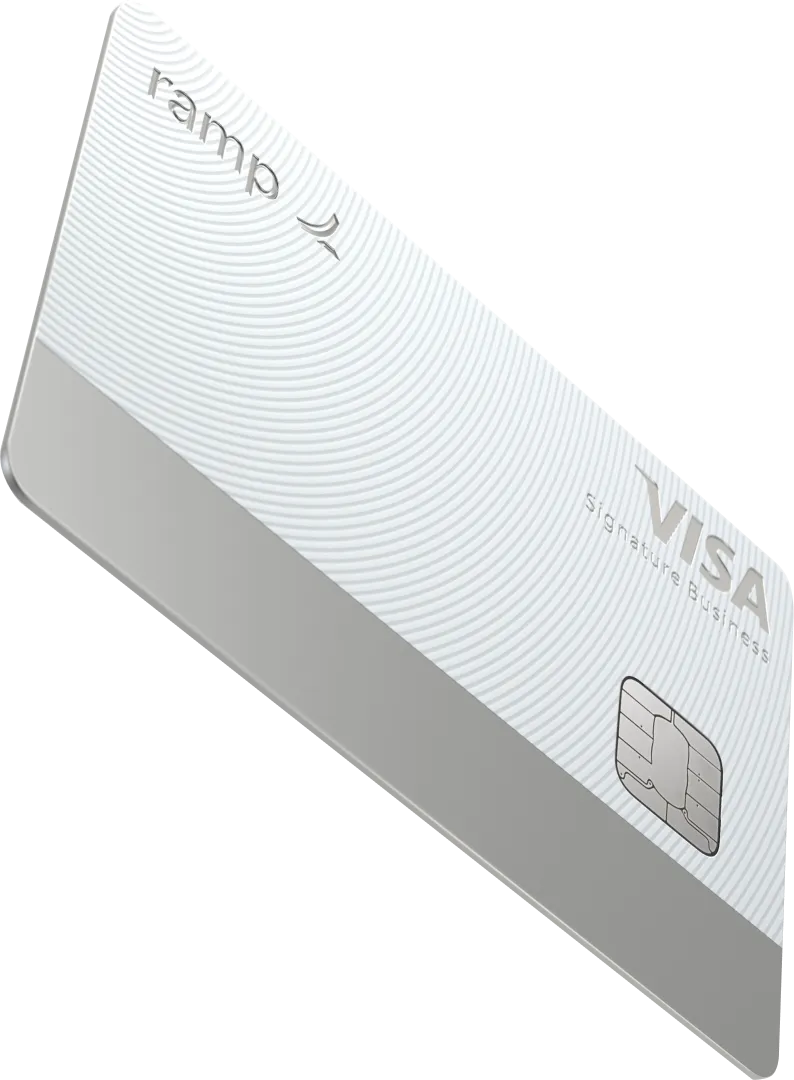
If you can pay your balance in full, a no-APR charge card like Ramp could be another option. It offers spending controls, but not a promotional period for carrying a balance.
0% APR and no-APR business credit cards compared
Compare the cards below by introductory offer, regular APR, annual fee, and rewards:
0% APR and no-APR card comparison

Annual Fee
$0
Intro APR
N/A — Charge card
Regular APR
N/A — Charge card
Rewards
Cashback
 U.S. Bank Business Shield Visa Card
Annual fee
$0
Intro APR
0% for 12 billing cycles
Regular APR
Variable
Rewards
5% on eligible travel
 U.S. Bank Business Triple Cash Rewards Visa Business Credit Card
Annual Fee
$0
Intro APR
0% for 12 billing cycles
Regular APR
17.49%–26.49% (variable)
Rewards
Cashback
 Chase Ink Business Unlimited Credit Card
Annual Fee
$0
APR
0% for 12 months, then 16.99%–24.99% variable
FX Fees
3%
Rewards
1.5% cash back
 Chase Ink Business Cash Credit Card
Annual Fee
$0
APR
0% for 12 months, then 16.99%–24.99% variable
Personal Guarantee
Required
 Wells Fargo Signify Business Cash Card
APR
0% intro APR for 12 months, then 16.99%–24.99% variable
Annual fee
$0
Rewards
2% cash rewards, uncapped
 American Express Blue Business Cash Card
APR
0% intro APR for 12 months, then 16.99%–28.74% variable
Annual fee
$0
Rewards
2% on first $50K/yr, then 1%
 Capital One Spark 1.5% Cash Select
Intro APR
0% for 9 months
Regular APR
16.99%–26.99% variable
Annual fee
$0
Rewards
1.5% cashback
 Bank of America Business Advantage Customized Cash Rewards Credit Card
Annual Fee
$0
Intro APR
0% for 7 billing cycles
Regular APR
16.99%–26.99% variable
Rewards
Cashback
Card offers and terms can change. Check current issuer disclosures before applying.
1. Ramp Corporate Card
Best for: Businesses that want to avoid revolving interest and manage employee spending
The Ramp Corporate Card is a no-APR alternative for businesses that pay their balance in full and want spending controls alongside expense management. Unlike an introductory 0% APR card, it does not provide a promotional period for carrying a balance. The balance is due in full according to the applicable payment terms.
Ramp offers cashback rewards on purchases, physical and virtual cards with custom limits, and pre-spend controls. You can set merchant or category restrictions to help prevent purchases that don't meet your controls. Ramp also auto-codes 90% of transactions on receipt and syncs them to accounting and ERP systems, reducing manual data entry. There is no annual fee, personal guarantee, or personal credit check.
2. U.S. Bank Business Shield Visa Card
Best for: Businesses that want an introductory offer covering both purchases and eligible transfers
The U.S. Bank Business Shield Visa Card offers 0% introductory APR on purchases and eligible balance transfers for the first 12 billing cycles through the online offer. Transfers must be made within 30 days of account opening. A variable APR applies afterward, and the card has no annual fee.
A balance transfer fee of 5% of each transfer, with a $5 minimum, applies. The card earns 5% cashback on eligible prepaid airfare, hotels, and car rentals booked through U.S. Bank's Travel Center. U.S. Bank's terms say the introductory rate may end early after a late payment, returned payment, or an account exceeding its credit limit. Offers can vary by application channel.
3. U.S. Bank Triple Cash Rewards Visa Business Card
Best for: Businesses that want a purchase and transfer offer plus category cashback
The U.S. Bank Triple Cash Rewards Visa Business Card offers 0% introductory APR on purchases and eligible balance transfers for the first 12 billing cycles. Transfers must be made within 30 days of account opening. A variable APR applies afterward, and there is no annual fee.
The card earns 3% cashback on eligible purchases at office supply stores, cell phone service providers, restaurants, and gas and EV charging stations. The gas and EV rate applies to transactions of $200 or less; other exclusions apply. Other eligible purchases earn 1%. A transfer fee of 5% of each transfer, with a $5 minimum, applies.
4. Chase Ink Business Unlimited Credit Card
Best for: Businesses that prefer flat-rate rewards without tracking spending categories
The Chase Ink Business Unlimited offers 0% introductory APR on purchases for 12 months from account opening, followed by a variable purchase APR of 16.99%–24.99%. There is no annual fee.
The card earns unlimited 1.5% cashback on purchases and offers employee cards with individual spending limits. The introductory offer applies to purchases. Check the issuer's terms for balance transfers.
5. Chase Ink Business Cash Credit Card
Best for: Businesses with substantial office supply, internet, cable, and phone spending
The Chase Ink Business Cash offers 0% introductory APR on purchases for 12 months from account opening, followed by a variable purchase APR of 16.99%–24.99%. There is no annual fee.
The card earns 5% cashback on the first $25,000 in combined purchases at office supply stores and on internet, cable, and phone services each account anniversary year. It also earns 2% on the first $25,000 in combined purchases at gas stations and restaurants each account anniversary year. Other eligible purchases, including spending beyond the caps, earn 1%.
6. Wells Fargo Signify Business Cash Card
Best for: Businesses looking for flat-rate cash rewards without tracking categories
The Wells Fargo Signify Business Cash Card offers 0% introductory APR on purchases for 12 months from account opening, followed by a variable purchase APR of 16.99%–24.99%. There is no annual fee.
The card earns unlimited 2% cash rewards on eligible purchases. The issuer's terms also list a 3% foreign currency conversion or foreign transaction fee, which matters if you pay overseas vendors.
7. American Express Blue Business Cash Card
Best for: Businesses whose eligible spending fits the card's annual rewards cap
The American Express Blue Business Cash Card offers 0% introductory APR on purchases for 12 months from account opening, followed by a variable purchase APR of 16.99%–28.74%. There is no annual fee.
The card earns 2% cashback on eligible purchases up to $50,000 per calendar year, then 1% on eligible purchases after that. Cashback is automatically credited to your statement, subject to the card's terms.
Prefer points? American Express also offers the Blue Business Plus Credit Card. Compare its current rewards and terms before deciding. See its 0% introductory APR business-card listings for other options.
8. Capital One Spark 1.5% Cash Select
Best for: Businesses that want simple flat-rate cashback and a shorter introductory purchase window
The Spark 1.5% Cash Select offers 0% introductory APR on purchases for 9 months, followed by a variable purchase APR of 16.99%–26.99%. It has a $0 annual fee.
The card earns unlimited 1.5% cashback on purchases, plus unlimited 5% on hotels and rental cars booked through Capital One Business Travel. Free employee cards are available. Check the issuer's terms for balance transfers.
9. Bank of America Business Advantage Customized Cash Rewards
Best for: Businesses that want to customize a rewards category
The Bank of America Business Advantage Customized Cash Rewards card offers 0% introductory APR on purchases for the first seven billing cycles after account opening, followed by a variable purchase APR of 16.99%–26.99%. It has no annual fee.
The card earns 3% in the selected category and 2% on dining on the first $50,000 in combined choice-category and dining purchases each calendar year, then 1% on those purchases. Other eligible purchases earn 1%. The introductory offer applies to purchases; balance transfers have a separate variable APR and a 5% transfer fee.
Discover Ramp's corporate card for modern finance
What is a 0% APR business credit card?
A 0% APR business credit card charges no interest on eligible purchases, balance transfers, or both during a promotional period. You generally still need to make minimum payments, and the standard APR may apply to a remaining balance afterward. The Consumer Financial Protection Bureau explains how a daily periodic rate works when interest applies.
How to choose a 0% APR business credit card
Focus on how long you need financing and whether the offer covers the transaction you plan to make. Here's what to look for:
| Factor | What to look for |
|---|---|
| Introductory period | Confirm the start and end dates and whether the issuer counts months or billing cycles. |
| Eligible transactions | Check whether the 0% rate applies to purchases, balance transfers, or both. |
| Balance transfers | Review the transfer deadline, fee, and issuer restrictions. |
| Standard APR | Compare the rate that may apply to any balance remaining after the offer. |
| Rewards and fees | Compare eligible spending, rewards caps, annual fees, and foreign transaction fees. |
| Business tools | Consider employee cards, spending controls, expense tracking, and accounting integrations. |
| Approval and credit limit | Review the issuer's requirements. A sufficient limit and approval are not guaranteed. |
Match the intro period to your payoff plan
Offers may be measured in months or billing cycles, and the clock may start at account opening rather than your first purchase. Check the exact dates and calculate a payment that clears the balance before the promotion ends, leaving room for a buffer if your cash flow changes. Make at least the required minimum payment on time, and check whether a late or returned payment could end the promotion early.
For example, a $12,000 eligible purchase paid over 11 months would require about $1,091 a month, assuming no added charges or fees. On a 12-month promotion, that leaves roughly one month of buffer, but your actual due dates and promotional end date determine your schedule.
Compare the standard APR and fees
The standard APR may apply to a balance remaining after the promotion. Compare interest rates, transfer fees, late fees, and any foreign transaction fees against your expected use.
Compare rewards and business tools
Compare points or cash back using your actual spending, eligible categories, and caps. For employee spending, consider card controls and accounting tools, and check whether your approved credit limit covers the planned transaction.
The Ramp Corporate Card offers up to 20x higher credit limits than traditional business credit cards. As a charge card, Ramp requires the balance to be paid in full according to the applicable payment terms.
How to use balance transfers on a 0% APR card
A promotional balance transfer can reduce interest while you pay down eligible debt, but the fee and deadline matter. Before moving a balance:
- Confirm the 0% rate applies to balance transfers, not just purchases.
- Check the transfer window and any issuer restrictions. The U.S. Bank offers above require eligible transfers within 30 days of account opening.
- Calculate the transfer fee and compare it with the interest you would otherwise expect to pay as the balance declines.
- Plan payments that clear the transferred balance before the promotion ends. Continue paying the original account until the transfer is complete.
For example, a $10,000 transfer with a 5% fee costs $500. Paying down the $10,000 principal over 12 months would require about $833.33 per month, with the fee accounted for separately. Actual savings depend on your existing interest rate, repayment schedule, how the fee is charged, and the new card's terms.
How to qualify for a 0% APR business credit card
Issuers may consider business information, financial history, and your personal credit. Review the issuer's requirements and how credit scores affect business card applications. Ask whether applying involves a hard personal credit inquiry or a personal guarantee; some business cards don't require a personal guarantee. Requirements vary, and no score guarantees approval.
What kind of business is a 0% APR or no-APR card best for?
A 0% introductory APR card can give a business time to pay for an eligible purchase or transfer. A seasonal landscaping company, for example, might buy equipment before its busy season and pay it off as revenue arrives.
A no-APR charge card may suit a business that can pay in full under its terms and wants spending controls. Compare charge cards and credit cards, other working capital options, or a business line of credit if you need a different financing arrangement.
Business vs. personal 0% APR cards
A business or personal 0% APR card can finance eligible purchases during a promotion, but each has different terms and protections.
A business card can help separate expenses, provide employee cards, and, depending on the issuer's reporting practices, help build business credit. A personal card may offer consumer protections that do not apply in the same way to business cards. The Federal Reserve's report on small business credit cards discusses these distinctions. Check current terms and applicable protections before deciding.
Using a personal card for business purchases may also require more work to keep records separate. Consider your accounting needs, employee access, and personal liability alongside the offer itself.
Why businesses choose Ramp's no-APR corporate card
If you can pay your balance in full, Ramp's corporate card gives you a way to manage everyday spending without APR or interest. Unlike a 0% introductory offer, it doesn't provide a promotional period for carrying a balance, so you'll need to pay in full according to your payment terms.
You can issue physical and virtual cards with custom limits and set merchant or category restrictions before employees spend. Ramp enforces those controls at the point of swipe, helping you prevent out-of-policy purchases rather than finding them after the fact.
Ramp also helps your team spend less time on finance work. It auto-codes 90% of transactions and syncs them to your accounting or ERP system, giving you visibility into spending while reducing manual data entry.
Ramp offers cashback rewards on purchases and requires no personal guarantee or personal credit check. The median Ramp customer saved 7.5% on expenses and grew revenue 16% in their first year.
More than 85,000 businesses use Ramp to save over $1 billion a month and over a year’s worth of work every hour.
Compare traditional business credit cards and corporate cards, or see how much time and money your team could save with Ramp.

FAQs
Introductory offers change and can vary by application channel. Among the offers reviewed, U.S. Bank's online Business Shield and Triple Cash offers provide 0% APR on purchases and eligible balance transfers for the first 12 billing cycles. Check current issuer terms before applying.
Some do. U.S. Bank's online Business Shield and Triple Cash offers cover eligible transfers made within 30 days of account opening. A balance transfer fee applies. Other cards may offer a promotional rate only on purchases, so check the offer details.
The applicable standard APR may apply to a remaining balance after the introductory period ends. Check your agreement for the rate and any conditions that could end the promotion early.
Yes. The Ramp Corporate Card is a charge card with no interest and no APR. Unlike a revolving credit card, its balance is due in full according to the applicable payment terms.
Some issuers review an applicant's personal credit, and application and reporting practices vary. Ask the issuer how an application and account activity may affect your personal credit. Ramp requires no personal guarantee or personal credit check.


“Our cupcakes are handmade. Our back office doesn’t need to be. Ramp gives us the automation to run a big business without losing the personal touch that made us who we are.”
Amanda Tedeschi
Controller, Baked by Melissa

“I want to trust the people at our sites to buy what they need, when they need it. With everything in Ramp, they have one place to go and one set of rules to follow. And I can see how all of their spending ties back to the contracts that fund their work.”
Marina Peterson
CFO, Wu Yee Children’s Services

“Finance isn’t just there to keep a record of the past. Are we negotiating with a retail partner? We have a seat at that table. Looking at a brand partnership? We have a seat at that table too. That’s really the big unlock: finance can be a strategic partner across the business, while Ramp keeps day-to-day work from pulling us away.”
Rachel Prescott
CFO, Caraway

“I assumed I would have to choose between speed and control. What I found is that you can have both. A well-designed system takes friction out, for the finance function and for everyone else.”
Justin Webster
CFO, Denver Broncos

“A well-run district should not have to choose between getting work done at the school site and keeping control of the dollars behind it. We're not hiring more people to do more jobs, so we have to be smarter about the process. With Ramp, the purchase, the receipt, and the record stay together from the start. ”
Nick Brizeno
Director of Purchasing, San Marcos Unified School District

“In senior living, scale only works if the communities still feel personal. We needed the back office to carry more of the complexity, not the people serving residents. Ramp helped us build that infrastructure, so the experience in the community could stay human.”
Ryan Cole
CFO, Agemark Senior Living

“AI is moving faster than the finance context around it. Prices change, models change, and the value is not always obvious from an invoice. We needed enough detail to know which bets deserved more investment — and which ones did not.”
Greg Cooley
Controller, AngelList

“Invoices, cards, tokens. The categories change but the principle doesn't: know where the money is going, remove the work around it, and make sure the spend is worth it.”
Maciej Mylik. Finance
ElevenLabs
